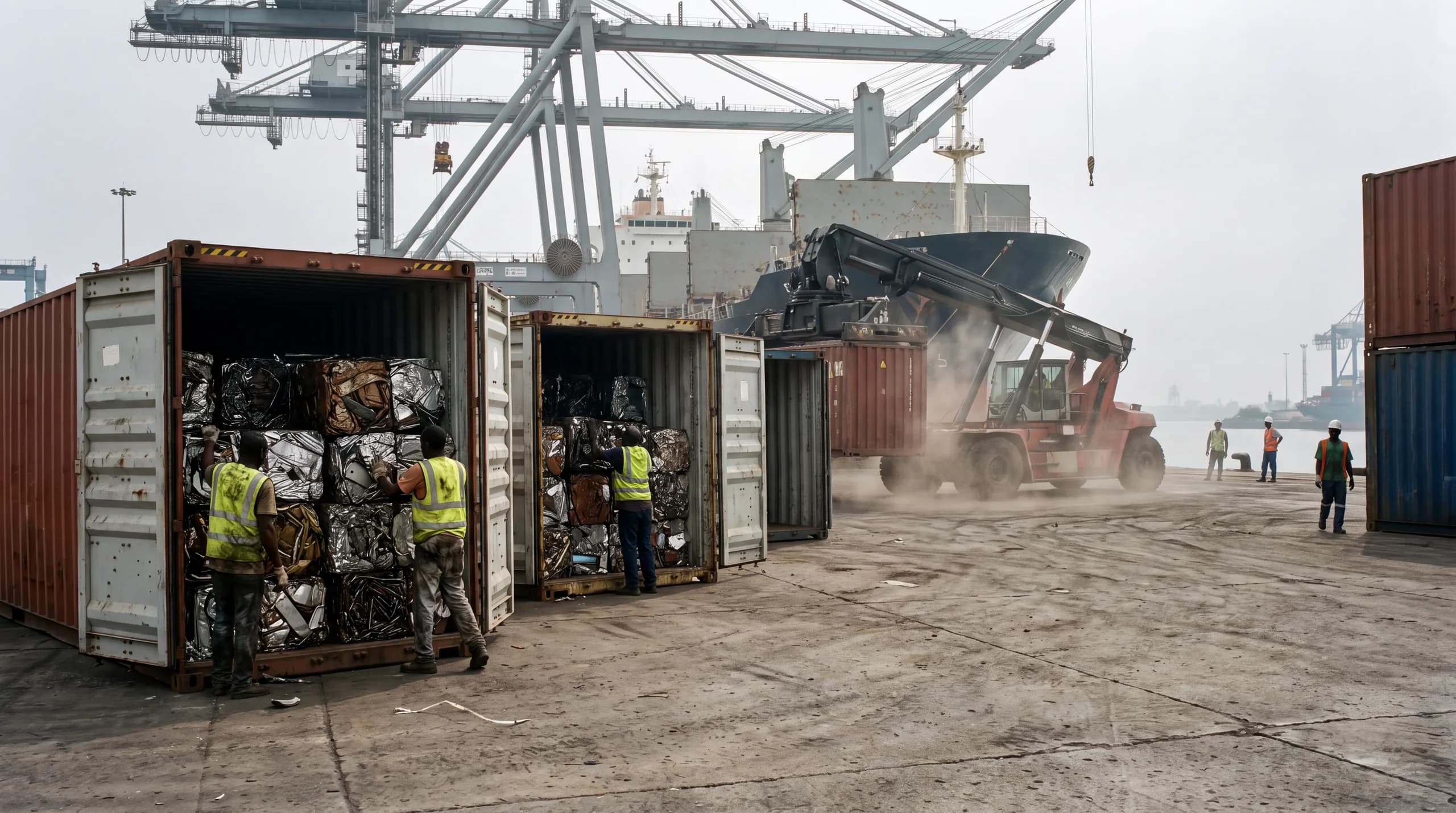
From origin yard to destination mill.
Bergent coordinates containerisation, documentation and freight from origin through to delivery into Karachi KPT or Port Qasim, and can arrange independent inspection where the contract requires it. Pakistan buyers receive the document set agreed for their cargo.
Inspection & processing
Where buyer or contract requirements dictate, Bergent may arrange third-party inspection at origin by an accredited independent surveyor — for example SGS or Bureau Veritas, depending on buyer requirements. The surveyor issues a grade certificate confirming the ISRI classification, net weight (weighbridge ticket), and any quality deviations noted during loading.
Non-ferrous material undergoes fire assay or ICP-OES chemical analysis before shipment. Ferrous cargoes carry a NORM/gamma radiometric clearance certificate. Aluminium and stainless-steel lots are screened by handheld XRF for alloying element confirmation. All assay results are included in the shipping document package.
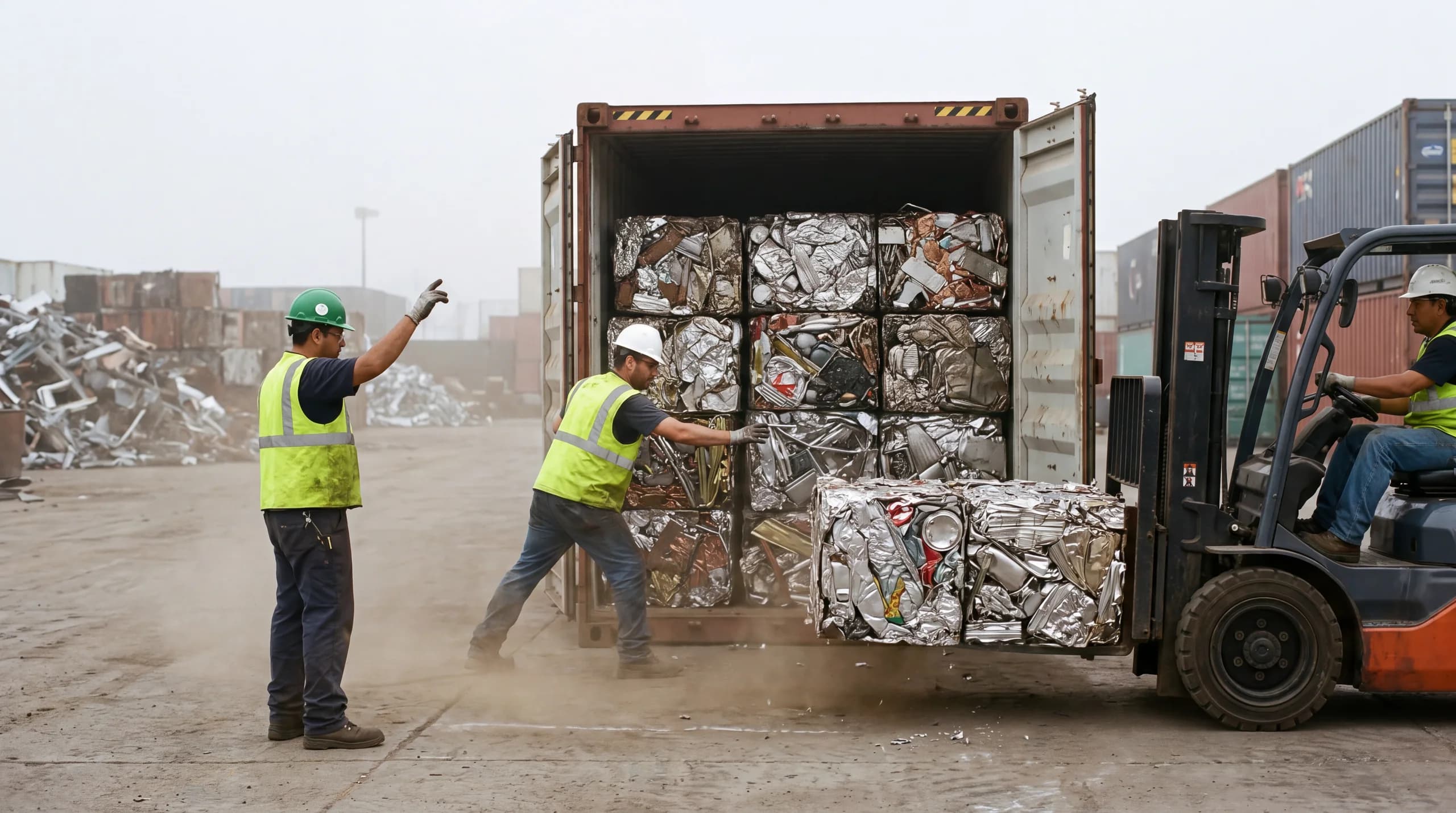
Containerisation
Loaded and verified at origin
Container shipments use 40 ft high-cube or standard 20 ft boxes depending on material density. Ferrous is loaded at 22–25 tonnes per 40 ft box. Copper and brass at 10–12 tonnes per 20 ft. Electric motors and compressors are typically loose-stowed in 40 ft containers.
Loading is coordinated with the origin yard and signed off by the independent surveyor, who records container numbers and seal references at point of stuffing.
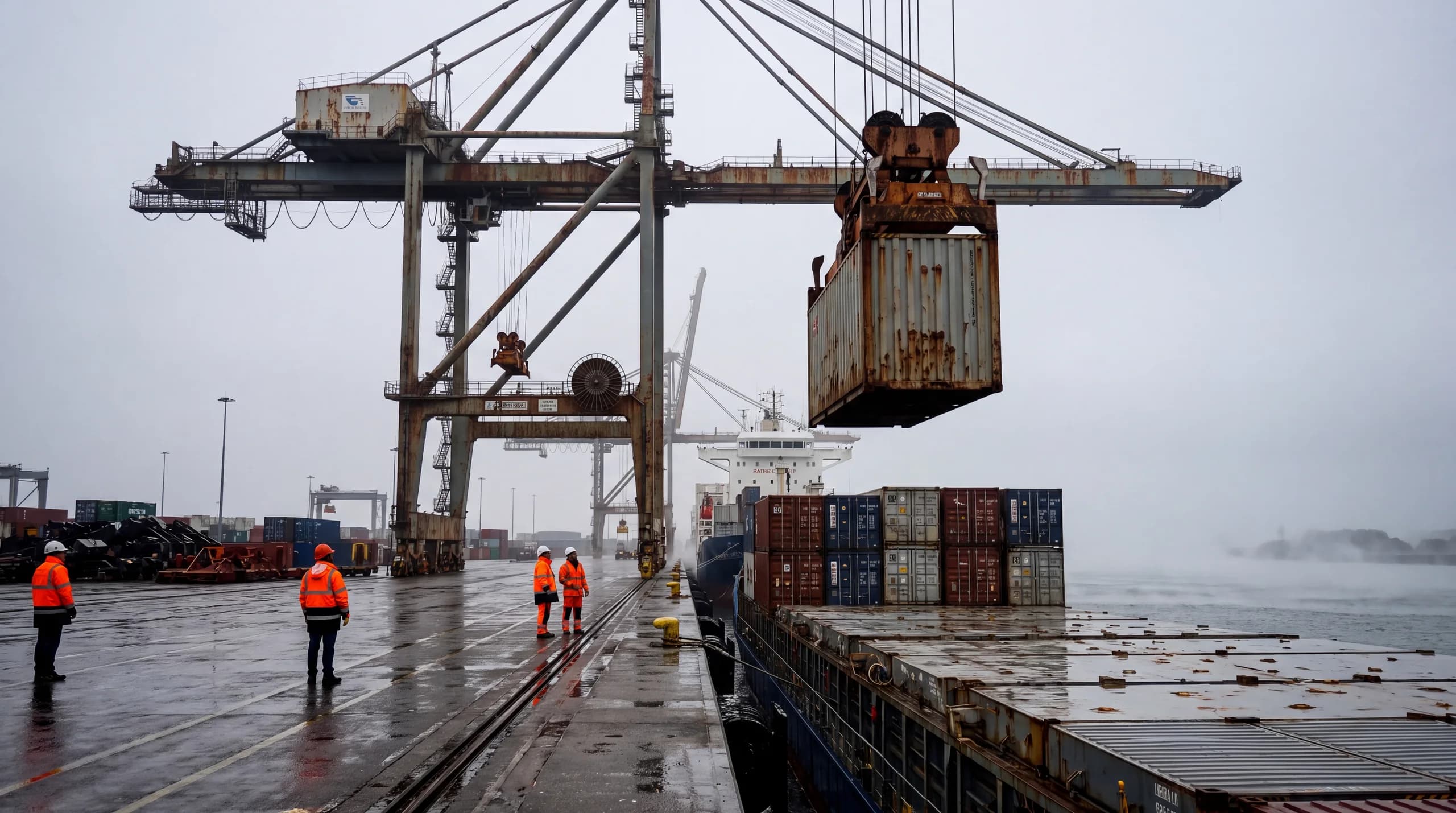
Bulk Freight
Vessel charters for large ferrous lots
Bulk charters of 30,000–55,000 DWT serve large ferrous shipments, loaded via grab crane or conveyor. Draft surveys at loading port and discharge port confirm net cargo weight. Hold inspections by the P&I correspondent are arranged prior to loading.
Container or bulk: how the mode is chosen
Shipment mode is determined by cargo volume, material type, and vessel economics. Both routes can be arranged on CFR or CIF terms into Karachi KPT or Port Qasim.
Container shipments
Containers are selected by material density. Ferrous runs at 22–25 tonnes per 40 ft box; copper and brass at 10–12 tonnes per 20 ft box. Electric motors and compressors are typically loose-stowed in 40 ft containers. VGM submission and shipping-instruction deadlines are coordinated with the freight forwarder ahead of the vessel cut-off.
Bulk charters
Bulk charters of 30,000–55,000 DWT serve large ferrous shipments loaded via grab crane or conveyor. Draft surveys at loading and discharge ports confirm net cargo weight for the shipping document set, replacing the weighbridge ticket as the primary weight instrument. Hold inspections by the P&I correspondent can be arranged prior to loading where the contract provides.
| Dimension | Container | Bulk charter |
|---|---|---|
| Unit | 40 ft high-cube or standard 20 ft box | Chartered vessel, 30,000–55,000 DWT |
| Materials suited | Ferrous, copper, brass, electric motors, compressors | Large ferrous parcels |
| Typical load per unit | 22–25 t per 40 ft box (ferrous); 10–12 t per 20 ft box (copper and brass) | Net weight confirmed by draft survey |
| Weight verification | Weighbridge at origin; VGM coordinated with freight forwarder | Draft survey at loading and discharge port |
| Sealing / inspection | Numbered bolt seal fitted and recorded in sealing certificate | Hold inspection by P&I correspondent can be arranged prior to loading |
| When applicable | Mixed-material lots; smaller ferrous parcels; non-ferrous material | Large ferrous volumes where vessel economics support a charter |
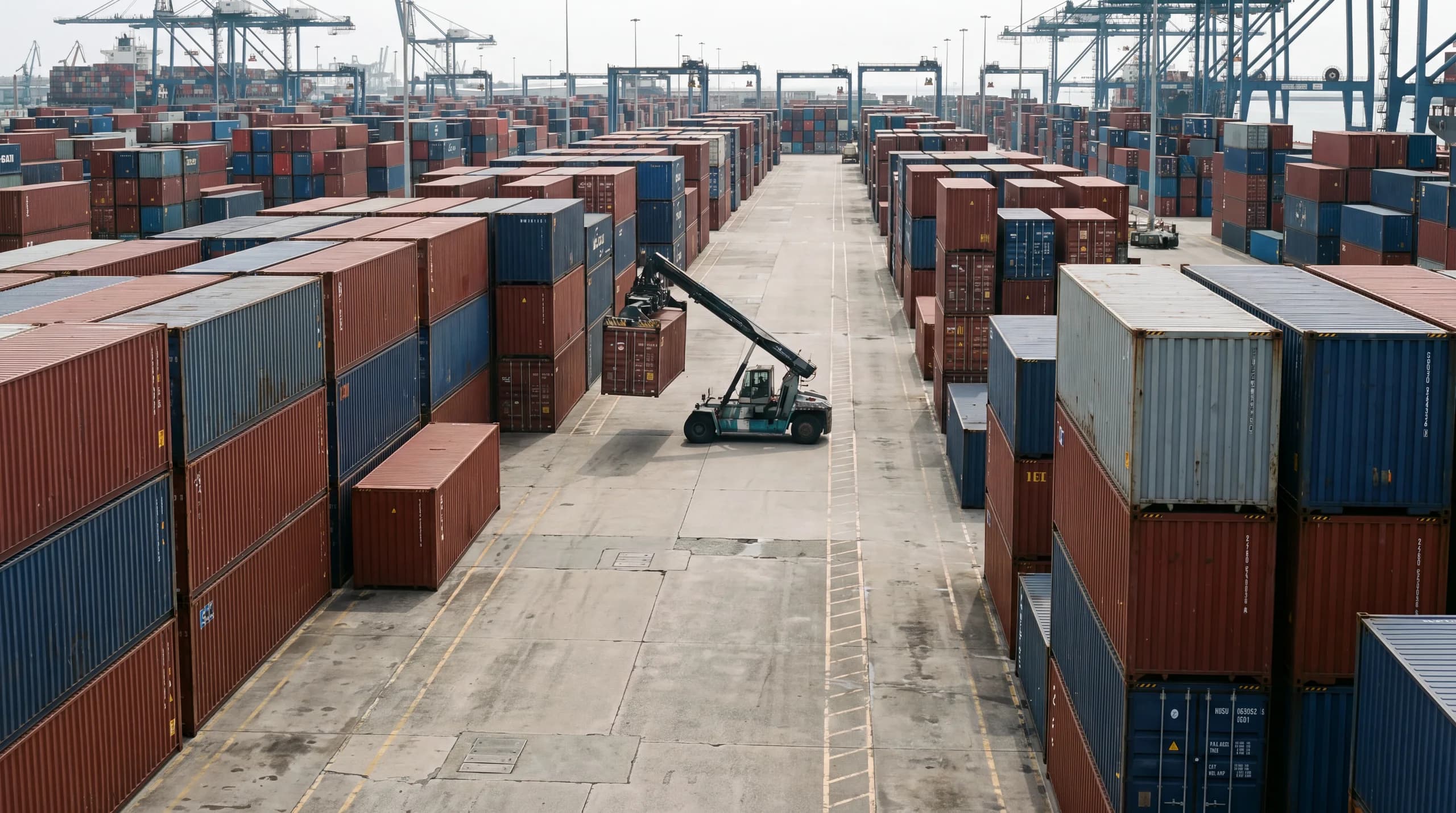
Export Coordination
Staged and released before vessel cut-off
Containers are positioned at the export container yard before the vessel's cut-off deadline. Bergent coordinates container release, VGM submission, and shipping instruction deadlines with the freight forwarder to meet departure windows.

Documentation
Seals recorded before departure
Numbered bolt seals are fitted by the independent surveyor and recorded in the sealing certificate, which forms part of the shipping document set. The document package is agreed per contract and must satisfy destination-country import requirements before the vessel departs.
Documentation & compliance
The document set is agreed per contract and typically covers the items below. Any deviation from destination-country import requirements is resolved before the vessel departs.
- Shipments documented against Basel Convention non-hazardous requirements
- Material graded to ISRI standards with independent third-party assay
- Radiometric screening and NORM/gamma clearance for ferrous cargo
- EU waste shipment regulation 1013/2006 procedures for EU-origin cargo
- Container fumigation arranged where the destination requires it
Incoterms Bergent handles
We quote FOB, CFR, and CIF on most shipments. FAS and EXW available by arrangement.
| Term | Name | Description |
|---|---|---|
| FOB | Free on Board | Seller covers loading and arranges vessel or container; buyer assumes risk and cost from port of departure (typically Rotterdam, Antwerp, or Hamburg). |
| CFR | Cost and Freight | Seller covers freight to destination port (Karachi KPT or Port Qasim); buyer assumes risk from loading. Insurance is the buyer's responsibility. |
| CIF | Cost, Insurance, and Freight | Seller covers freight and arranges marine insurance to destination port. Buyer assumes risk from loading. Standard Incoterm for most Bergent shipments to Pakistan. |
| FAS | Free Alongside Ship | Seller delivers material alongside the vessel at port of origin; buyer arranges loading and all onwards costs. Used for smaller parcels or specialised handling. |
| EXW | Ex Works | Seller makes material available at the origin facility; buyer arranges pickup, transport, and all shipping. Rarely used except for pre-arranged collection or regional trucking. |
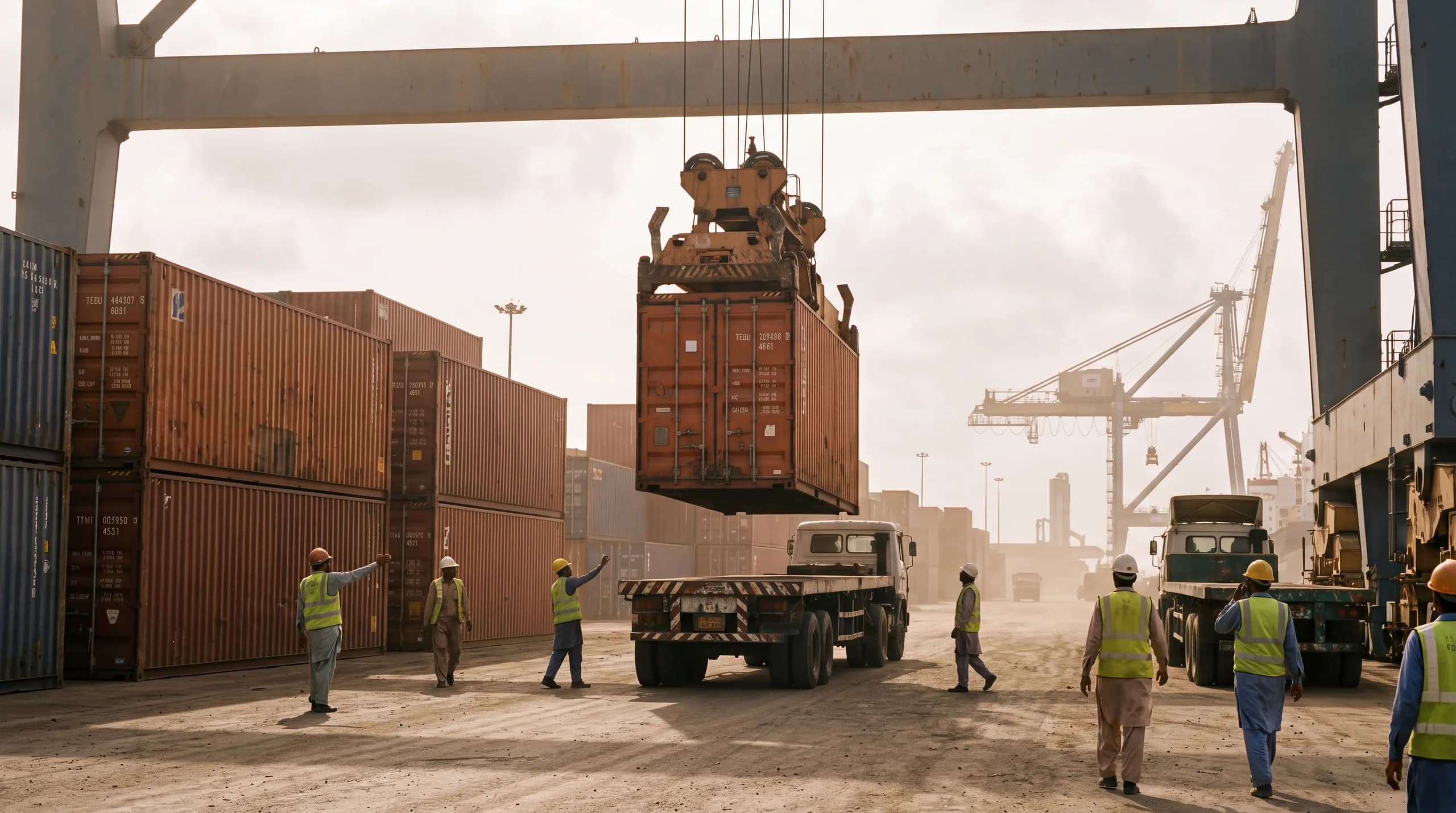
Pakistan Destination
Discharge into Karachi KPT and Port Qasim
Container and bulk shipments discharge at Karachi KPT or Port Qasim, depending on the buyer's mill location and port availability. Bergent can arrange CFR or CIF terms to either port. The buyer takes responsibility for customs clearance, unloading, and onward transport on arrival.
Original shipping documents — bill of lading, packing list, weight certificate, and grade certificate — are dispatched by courier once the vessel has sailed and the LC presentation deadline is confirmed.
Next trade